Key takeaways
- Heat flows from warm to cool on its own. Air conditioners and heat pumps use energy to push it the other way.
- Your house gains and loses heat three ways: conduction, convection, and radiation.
- An air conditioner does not make cold. It moves heat out of your house.
- Humidity is part of comfort, which is one reason sizing and run time matter.
- Understanding the basics helps you ask better questions when you buy or repair equipment.
The one rule that explains everything
Left alone, heat always moves from a warmer place to a cooler one. A hot cup of coffee cools to the temperature of the room. A cold glass of water warms up on the counter. Your house does the same thing. In winter, heat leaks from your warm living room to the cold outdoors. In summer, heat leaks the other way, from the hot yard into your cool kitchen.
A heating and cooling system is a machine that works around that rule. A furnace or boiler adds heat to replace what leaks out. An air conditioner or heat pump uses energy to push heat in the direction it would not go on its own. Once you hold on to that idea, the rest of this guide falls into place.
How heat moves: conduction, convection, and radiation
Heat travels in three ways, and your house uses all three.
| Type | How it works | Where you see it in a house |
|---|---|---|
| Conduction | Heat passes through solid material from molecule to molecule | Through walls, windows, and ceilings, and into a cold metal pipe you touch |
| Convection | Warm air or water rises and cooler air or water sinks, creating flow | Warm air rising to the second floor, hot water circulating in radiators, forced air from vents |
| Radiation | Heat travels as infrared energy that warms what it hits | Sun through a window, a wood stove, a hot radiator warming you from across the room |
This is why insulation, air sealing, and windows matter as much as equipment. Insulation slows conduction. Air sealing limits the convection that carries heat through gaps. Good windows cut both and reduce unwanted radiation from the sun. A tight house needs a smaller system, and a leaky house makes any system work harder.
How heating systems add heat
Most heating systems in New England make heat by burning a fuel or by running electricity through a resistance or a heat pump.
- Furnaces: Burn gas or oil in a combustion chamber. A heat exchanger passes the heat to air, and a blower sends the warm air through ducts. The combustion gases are vented outdoors and never mix with the air you breathe. See furnace repair for what goes wrong when that system fails.
- Boilers: Burn fuel to heat water. A pump or natural convection sends the hot water or steam to radiators. See boiler repair and installation.
- Electric resistance: Passes current through a wire, which gets hot. Simple, and every unit of electricity becomes one unit of heat.
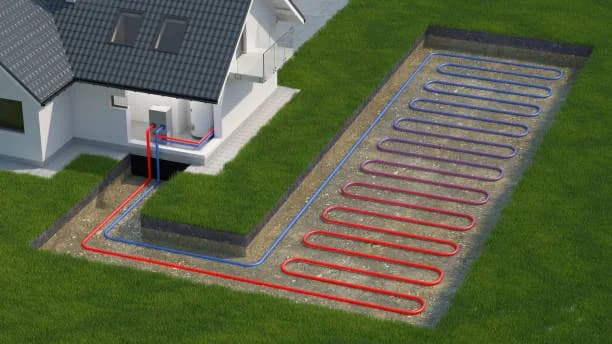
- Heat pumps: Move heat from outdoors to indoors. This is the clever one, and it is covered below.
Efficiency for fuel-burning equipment is measured as AFUE, the percentage of the fuel's energy that ends up as usable heat. An 80 percent furnace turns 80 percent of the fuel into heat for your house and sends the rest up the flue. A condensing furnace captures much of that lost heat by cooling the exhaust gases enough that water vapor in them condenses, which is why high efficiency units need a drain.
How an air conditioner works
An air conditioner does not create cold. It moves heat from inside to outside using a refrigerant, a fluid that boils at a low temperature. Here is the cycle in plain terms.
- Inside coil: Warm indoor air passes over the cold evaporator coil. The refrigerant inside absorbs the heat and turns from liquid to gas. The air that comes out is cooler.
- Compressor: The gas goes to the outdoor unit, where a compressor squeezes it. Compressing a gas makes it hotter.
- Outside coil: The hot gas passes through the outdoor condenser coil. A fan blows outdoor air across it, the refrigerant gives up its heat, and it turns back into liquid.
- Expansion device: The liquid passes through a restriction that drops its pressure and temperature, making it cold again.
- Repeat: The cold liquid goes back to the indoor coil, and the cycle continues.
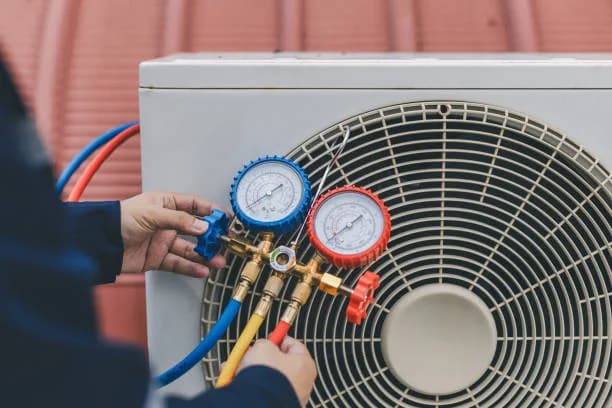
That cycle is also why airflow and refrigerant charge matter so much. A dirty filter or coil keeps the refrigerant from absorbing heat properly, and low refrigerant means the cycle cannot carry as much heat. See air conditioning repair for the problems we see most often.
How a heat pump does both
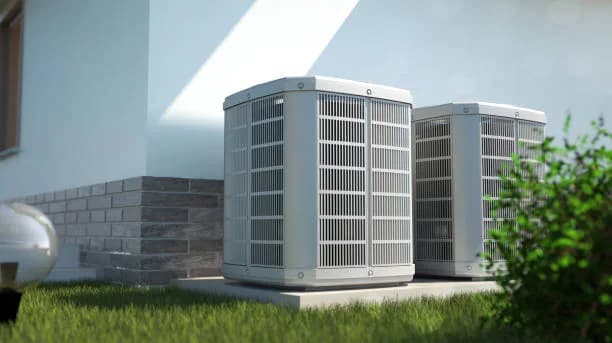
A heat pump runs the same cycle as an air conditioner, with a reversing valve that lets it run backward. In summer it pulls heat out of the house. In winter it reverses and pulls heat from the outdoor air into the house.
That sounds impossible when it is 20 degrees outside, but outdoor air at 20 degrees still contains heat energy. The heat pump's refrigerant gets colder than the air, so heat flows into it, and the compressor concentrates that heat and delivers it indoors. Because the machine moves heat instead of making it, a heat pump can deliver more heat energy than the electrical energy it uses. Colder weather makes the job harder, which is why cold climate models are built with stronger compressors and why design matters. ENERGY STAR explains what to look for in its guide to air-source heat pumps.
For how that plays out in a Massachusetts house, see our heat pump and furnace comparison and the service page on heat pumps and ductless mini-splits.
Why humidity is half of comfort
Comfort is not only temperature. In summer, humid air feels warmer because sweat does not evaporate as well. As air passes over the cold indoor coil of an air conditioner, moisture condenses on it and drains away, which dries the air. That is why a system that runs in long, steady cycles feels better than one that blasts and shuts off.
An oversized air conditioner cools the air quickly, satisfies the thermostat, and turns off before it has removed much moisture. The result is a house that is cool and clammy. In winter the opposite happens. Heated air holds more moisture capacity, so the humidity indoors drops and the air feels dry. A humidifier can help, with care to avoid condensation on windows. See ductwork and air quality.
What the thermostat actually does
A thermostat is a sensor with a switch. It measures the temperature where it hangs and tells the equipment to start or stop. Where it hangs matters, because it only knows about that spot. A thermostat in a hallway next to the kitchen will respond to cooking. One in direct sun will think the house is hot. Good placement and good settings let equipment run in long, gentle cycles.
Smart thermostats add scheduling and remote access, and on heat pumps they manage the balance between the heat pump and backup heat. See thermostat installation.
Questions homeowners ask
Does an air conditioner make cold air?
Not exactly. It removes heat from the air inside your house and releases it outside. The air feels cold because heat has been taken out of it.
Why does a heat pump work in winter if the air is cold?
Cold air still contains heat energy. A heat pump's refrigerant gets colder than the air, so heat flows in, and the compressor concentrates it to heat your house.
What does AFUE mean?
Annual Fuel Utilization Efficiency. It is the percentage of a furnace or boiler's fuel that becomes usable heat for your house.
Why does my house feel clammy when the AC runs?
The system may be oversized and cycling too quickly to remove humidity. A properly sized system running longer cycles dries the air better.
Where should a thermostat be installed?
On an interior wall in a room that represents the house, away from direct sun, drafts, and heat sources like lamps or kitchens.
Related services
Sources and further reading
Written by the team at Home Heating and Cooling in Norwell, MA. We review our guides at least twice a year and update them when equipment, codes, or programs change. Last updated October 23, 2026.